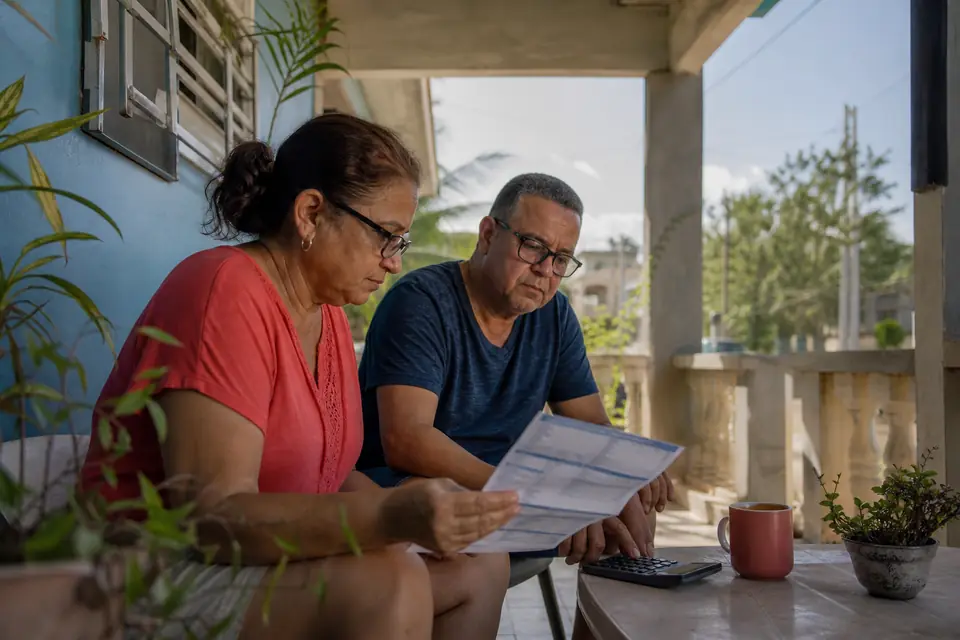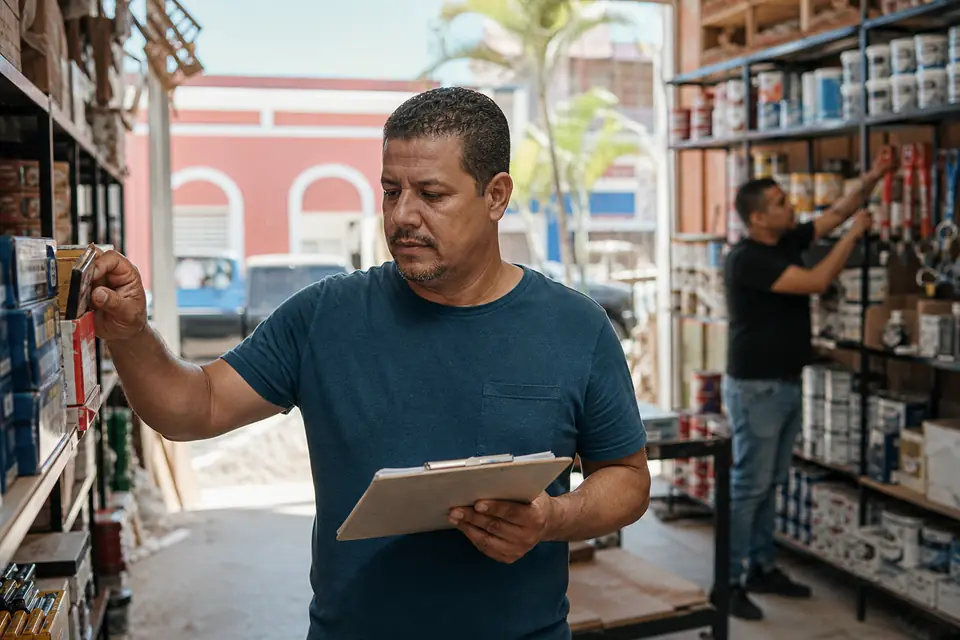
In addition to income tax, IVU (sales and use tax) and the patente municipal (municipal license tax), every business in Puerto Rico has an obligation many discover late: the personal property tax return (planilla de contribución sobre la propiedad mueble) filed with CRIM (Centro de Recaudación de Ingresos Municipales, the Municipal Revenue Collection Center). It is an annual statement of the movable property you use in your business, such as equipment, furniture, machinery and inventory, on which you pay a tax to the municipality where the property is located.
This guide summarizes who has to file, how property is valued, the deadlines and the exemptions. The rules are in Book VII of the Código Municipal de Puerto Rico (Puerto Rico Municipal Code, Act 107-2020), Articles 7.135 to 7.168.
Who must file
Under Article 7.135, every individual or legal entity engaged in a trade or business that on January 1 of each year owns personal property used in its business must file the return, even if the property is leased to someone else. That includes corporations, partnerships, LLCs and also individuals with their own business, such as a corner grocery store (colmado), a repair shop or a professional office with equipment.
- If all of your property is exempt, you do not have to file.
- If you have exempt or tax-relieved property along with taxable property, you must file and include both. CRIM stresses that having an exemption or exoneration does not release you from filing the return.
- If you are starting a business, you file through the portal with the new taxpayer documents: the IRS employer identification number certification, the certificate of incorporation from the Departamento de Estado (Department of State) or the patente, and your Registro de Comerciantes (merchant registration) from SURI (the online system of the Departamento de Hacienda, Puerto Rico's Treasury Department, "Hacienda"), as applicable.
What is personal property and what is real property. For CRIM, machinery and instruments that are not permanently attached to the building or the ground, and that can be removed without breaking or damaging the real property, are personal property. Anything permanently attached is part of the real property and is assessed under the real property tax.
Household furniture, jewelry and other items of strictly personal use are exempt (Article 7.092). Since Act 78-2025 (Ley 78-2025), prescription drugs are also exempt.
How property is valued
Equipment, machinery and furniture. These are reported at their book value as of January 1 (Article 7.136). When equipment is almost fully depreciated, it is assessed at a residual value of between 10% and 20% of the original cost. According to CRIM and its Regulation 7049, the percentage depends on the asset's useful life when it was acquired:
| Useful life when acquired | Minimum residual value |
|---|---|
| 2 to 5 years | 20% of cost |
| 6 to 10 years | 17% of cost |
| 11 to 15 years | 15% of cost |
| 16 years or more | 10% of cost |
If book value does not reasonably reflect market value, CRIM can assess the property at market value.
Inventory. Merchandise for sale is valued at the average annual inventory for the prior calendar year, according to your books (Article 7.148). If the balance includes IVU paid, it is reduced by that amount. The LIFO method is not accepted. If you do not keep accounting records that show periodic inventories, CRIM will use another method that reflects the value, such as stock on hand at the assessment date at replacement cost.
Where it is taxed. Business property is taxed in the municipality where it is located.
Rates
The tax is the assessed value × the municipality's personal property rate. The rate combines 1.03% state tax, a basic municipal tax of up to 4% and a special additional tax that varies by municipality. As with real property, the basic tax includes 0.20% that is not charged to the taxpayer.
Article 7.135 provides that CRIM must state each year, in the return's instructions, the rates that apply. For reference, in CRIM's table for fiscal year 2026-2027, the personal property rate the taxpayer pays ranges from 5.80% (Ceiba) to 10.33% (Cidra and Lajas). Some examples: Bayamón 7.58%, San Juan 8.33%, Ponce 8.33%, Mayagüez 8.58% and Carolina 9.33%.
Exemption for small retailers
Article 7.124 exempts the personal property tax on the first $50,000 of assessed value for retail merchants that meet these requirements:
- They are directly engaged in the sale of goods and services to consumers. According to CRIM, it applies to retail sales and non-professional services.
- Their net sales did not exceed $150,000 in the prior calendar year.
- They have no personal property tax debts, or they have an approved payment plan and are current on it (Article 7.125).
- They file the return on or before May 15, according to CRIM.
The exemption is not automatic. You request it on the return.
A corner grocery store in San Juan (hypothetical amounts) had net sales of $140,000 the prior year. Its equipment has a book value of $25,000 as of January 1, and its average inventory was $45,000. We use San Juan's 2026-2027 personal property rate of 8.33% as a reference.
- Total value reported: $25,000 + $45,000 = $70,000.
- Without the exemption: $70,000 × 8.33% = $5,831.00.
- With the retailer exemption: ($70,000 − $50,000) × 8.33% = $20,000 × 8.33% = $1,666.00.
- If the store paid the year's estimated tax, the 5% discount reduces it to $1,582.70.
Deadlines: return, extension and estimated tax
Return or extension: May 15. The return or the extension request is filed on or before May 15 of each year and is submitted electronically on the CRIM portal (Article 7.137). If you are required to file electronically and do not, you are considered not to have complied.
Automatic three-month extension. Every taxpayer is entitled to an automatic three-month extension, but must pay the estimated tax with the request. For the return for economic year 2025, Administrative Order 2026-006 stated that, because August 15, 2026, fell on a Saturday, the extended deadline was Monday, August 17, 2026.
Audited financial statements. If your business is required to submit audited financial statements with its Hacienda return (Section 1061.15 of the Código de Rentas Internas, the Internal Revenue Code of Puerto Rico), it must also submit them with the personal property return. For the 2025 return, Administrative Order 2026-007 allowed them to be submitted later, with a letter from the CPA filed along with the return: until September 30, 2026, for pass-through entities and until October 15, 2026, for regular corporations. Corporations with a decree had their own dates.
Estimated tax. Article 7.137 requires paying estimated tax in four equal installments: August 15, November 15, February 15 and May 15. If a business first becomes subject to the requirement later in the year, it pays in fewer installments. Paying estimated tax entitles you to a 5% discount on the self-assessed tax. If you miss an installment, the Code adds 10% of the unpaid amount.
The due date for the personal property return is not the same as for the Hacienda income tax return or the patente municipal. Put all three on your calendar. You can use the tax calendar as a guide.
Penalties
Under Article 7.161:
- Late payment: 10% annual interest and surcharges of 5% (more than 30 days), 10% (more than 60 days) or 15% (more than 90 days).
- Not filing on time: 5% of the unpaid amount for the first 30 days and another 5% for each additional 30 days, up to a maximum of 25%, unless there is reasonable cause.
- Negligence: 10% of the deficiency. Fraud: 100% of the deficiency.
If you do not file, CRIM can prepare a return on your behalf (planilla de oficio) with the information it obtains, and that return is presumed correct. Personal property tax debts are collected the same way as real property debts, including by levy. See CRIM debts.
If you close your business
If you close, the obligation continues for any year in which you owned property on January 1. File the final return, pay what is owed and notify CRIM of the closing. Our guide to closing a business explains the steps with Hacienda, the municipality and CRIM.
Frequently asked questions
Do I have to file if I am self-employed and only have a computer?
The Code has no minimum value. It applies to every person engaged in a trade or business who owns personal property on January 1. If your equipment is minimal, the tax will be low, but the obligation to file may still exist. Check with your accountant.
Is the IVU I paid on inventory included in the value?
No. Article 7.148 provides that, if the inventory balance includes IVU paid, it must be subtracted.
What happens if I file the extension but do not pay?
The extension requires paying the estimated tax with the request. If you do not pay, interest and surcharges build up, and you may lose the 5% discount.
Can I request the $50,000 exemption if I am a professional, such as an attorney or a doctor?
According to CRIM, the exemption is for merchants directly engaged in retail sales of goods and non-professional services, with sales of $150,000 or less.
Do I have to submit audited financial statements?
Only if you are required to submit them to Hacienda with your income tax return, or if you do so voluntarily. See corporate income tax for Hacienda's thresholds.
Sources
- Oficina de Gerencia y Presupuesto, "Código Municipal de Puerto Rico, Ley 107-2020, según enmendada (rev. 9 de septiembre de 2026)". bvirtualogp.pr.gov
- CRIM, "Preguntas frecuentes: propiedad mueble". portal.crim360.com
- CRIM, "Orden Administrativa 2026-006: Extensión de la fecha de radicación de la prórroga de contribución sobre la propiedad mueble". portal.crim360.com
- CRIM, "Orden Administrativa 2026-007: Fecha de radicación de los estados financieros con la planilla de propiedad mueble del año económico 2025". portal.crim360.com
- CRIM, "Tipos contributivos sobre la propiedad mueble e inmueble, año fiscal 2026-2027". portal.crim360.com
787TAX is an independent guide. It is not Puerto Rico's Departamento de Hacienda, the CRIM or the IRS. This page is general information, not tax or legal advice. Example figures are hypothetical. Found an error? Tell us.