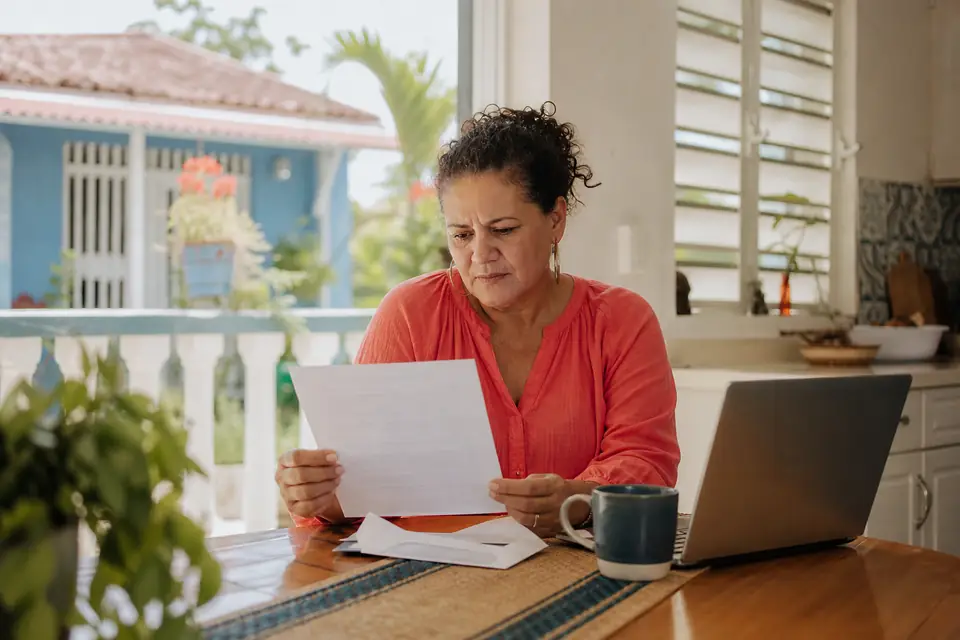
Scams that use the name of a tax agency work because they play on two emotions: fear of a debt or a fine, and the hope of money you are owed. In Puerto Rico, scammers may imitate the Departamento de Hacienda (Puerto Rico's Treasury Department, "Hacienda"), the Centro de Recaudación de Ingresos Municipales (CRIM, the Municipal Revenue Collection Center) or the federal Internal Revenue Service (IRS). Refund season, special payments such as the Alivio Contributivo (tax relief payment) and filing deadlines are fertile ground.
This guide helps you recognize the warning signs, check whether a contact is real and report fraud attempts.
The most common forms
Threatening phone calls
Someone says they are from Hacienda, CRIM or the IRS and claims you owe taxes. If you don't pay today, they say, you will be arrested, lose your license or have your bank account levied. Sometimes caller ID shows an agency's name, but the FTC warns that this information can be faked.
Text messages with links
A text announces a pending refund, a relief check or a debt, and asks you to click a link to "confirm" your bank account or pay. The link leads to a page that imitates SURI (Hacienda's online system) or an agency and captures your information.
Fake emails
Emails with official logos, attachments or forms that ask for your Social Security number, your SURI username and password or your card details.
Unusual payment methods
The FTC warns that impostors insist on payments that are hard to trace: gift cards, money transfers, cryptocurrency or payment apps. No tax agency collects with gift cards.
Fake preparers and "fixers"
People who promise bigger refunds, charge a fee based on the refund, ask for the refund to be deposited into their account or offer to "erase" a debt with Hacienda in exchange for an upfront payment. As of October 12, 2026, we found no amnesty in effect in Hacienda's official publications, so be wary of anyone selling you one.
How they really contact you
Hacienda. Formal deficiency notices are sent by certified mail or, if you filed electronically, they may arrive in your SURI account. We explain this in Hacienda notices. Levies also start with a notice sent by certified mail with return receipt. For the 2025 Alivio Contributivo, Hacienda said that if your return didn't include an account for direct deposit, your bank information was registered only through a link inside your account in SURI. As the press reported in May 2026, the Secretary of the Treasury described that link as the only official method, and Hacienda stated that it doesn't request sensitive information by email or text message.
IRS. The IRS says on its official website that it doesn't send emails or text messages without your permission, never sends direct messages on social media and never calls to demand immediate payment, threaten arrest or tell you about a refund. To understand when the IRS actually deals with you as a Puerto Rico resident, see Puerto Rico residents and the IRS.
CRIM. If a message says it comes from CRIM, verify it directly at crimpr.net (in Spanish) or at the phone numbers listed there. Also see CRIM debts.
How to verify before you act
- Don't use the link or phone number in the message. Type the address into your browser yourself: suri.hacienda.pr.gov for SURI, hacienda.pr.gov for Hacienda, irs.gov for the IRS.
- Check the domain. Government of Puerto Rico websites end in pr.gov, as the government's technology agency (PRITS) advised in May 2026. An address that looks similar but is different is a red flag.
- Log in to your SURI account. If you really have a debt or a refund, it will show up in your account. If nothing shows up, it is almost certainly a scam.
- Call an official number. For example, Hacienda Responde (Hacienda's call center) at (787) 620-2323. See how to contact Hacienda.
- Validate documents. If someone shows you a debt certification or a Hacienda certificate, you can validate it on SURI's main page, without an account, using the "Validar certificados y licencias" (validate certificates and licenses) option.
- Check your preparer. Hacienda publishes the list of registered tax preparers (in Spanish). Read more in how to file your return.
Warning signs: urgency ("today"), threats of arrest, payments with gift cards or cryptocurrency, shortened links, spelling mistakes and requests for your SURI password. A real agency gives you time, notifies you in writing and explains your rights.
Where to report
Scams that imitate the IRS, according to the IRS's official website:
- Suspicious emails: forward them as an attachment to phishing@irs.gov. Don't reply or open links or attachments.
- Text messages: send phishing@irs.gov the sender's number, the content, your number and the date and time, with "Text" as the subject. You can also forward the text to 7726 so your phone carrier can help block it.
- Phone calls: write down the number, hang up and report it to the TIGTA hotline (the Treasury Inspector General for Tax Administration, which oversees IRS matters) at 800-366-4484.
Government impostors in general: the FTC takes reports at ReportFraud.ftc.gov (in Spanish, ReporteFraude.ftc.gov). If you gave out your personal information, the FTC recommends visiting IdentityTheft.gov (in Spanish, RobodeIdentidad.gov) for next steps.
Scams that imitate Hacienda or CRIM: contact the agency through its official channels to let it know and to confirm the status of your account. For Hacienda, you can send a message from your SURI account or call Hacienda Responde.
If you already fell for it
Act quickly, and don't be embarrassed; these scams fool people of all ages:
- Call your bank or credit union (cooperativa) to block the card or account and dispute the charges.
- Change your SURI password and the password for any account where you use the same one.
- Check your SURI account for changes to your address or deposit account, or returns you didn't file.
- Report the incident to the agency that was imitated and to the FTC.
- Keep screenshots, phone numbers and receipts as evidence.
Frequently asked questions
Can Hacienda send me a text message?
Hacienda has used messages and notifications inside SURI, and formal notices arrive by certified mail or in your account. Treat any text with a link to pay or give bank information as suspicious, and verify by logging in to SURI yourself.
Someone called saying I have a refund on hold and they need to verify my account. Is it real?
The IRS says it never calls to tell you about a refund. For a Hacienda refund, check its status in your SURI account or with Hacienda Responde, never with the person who called you. See the guide to refunds.
How do I know if a SURI page is the real one?
Type suri.hacienda.pr.gov into your browser instead of using links. Make sure the address ends in pr.gov and is exactly that address.
A preparer is offering me a guaranteed refund if I give them my SURI password. What should I do?
Don't share your password. Section 6071.02 of the Código de Rentas Internas (Internal Revenue Code of Puerto Rico) requires the preparer to include their name, signature and registration number on the return, and to give you a copy of the signed return. You can check their registration on the list Hacienda publishes.
Should I pay a "debt" someone demands over the phone to avoid a levy?
Not that way. Hacienda starts levies with a notice sent by certified mail and gives you 30 days to pay or clear up the matter. Check first in SURI or with your Distrito de Cobro (collections district). We explain it in Hacienda levies.
Sources
- Internal Revenue Service, "Report phishing and online scams". irs.gov
- Comisión Federal de Comercio (FTC), "Cómo evitar una estafa de impostores del gobierno". consumidor.ftc.gov
- Departamento de Hacienda, "Alivio Contributivo". hacienda.pr.gov
- Metro Puerto Rico, "PRITS y Hacienda orientan sobre registro seguro para alivio contributivo" (13 de mayo de 2026). metro.pr
- Departamento de Hacienda, "Boletín Informativo de Rentas Internas Núm. 21-06: Certificaciones de Deudas". hacienda.pr.gov
- Departamento de Hacienda, "Lista de Especialistas en Planillas, Declaraciones o Reclamaciones de Reintegro". hacienda.pr.gov
787TAX is an independent guide. It is not Puerto Rico's Departamento de Hacienda, the CRIM or the IRS. This page is general information, not tax or legal advice. Example figures are hypothetical. Found an error? Tell us.